Article: Harley Big Bore Kits Explained: Evo, Twin Cam & M8
Harley Big Bore Kits Explained: Evo, Twin Cam & M8
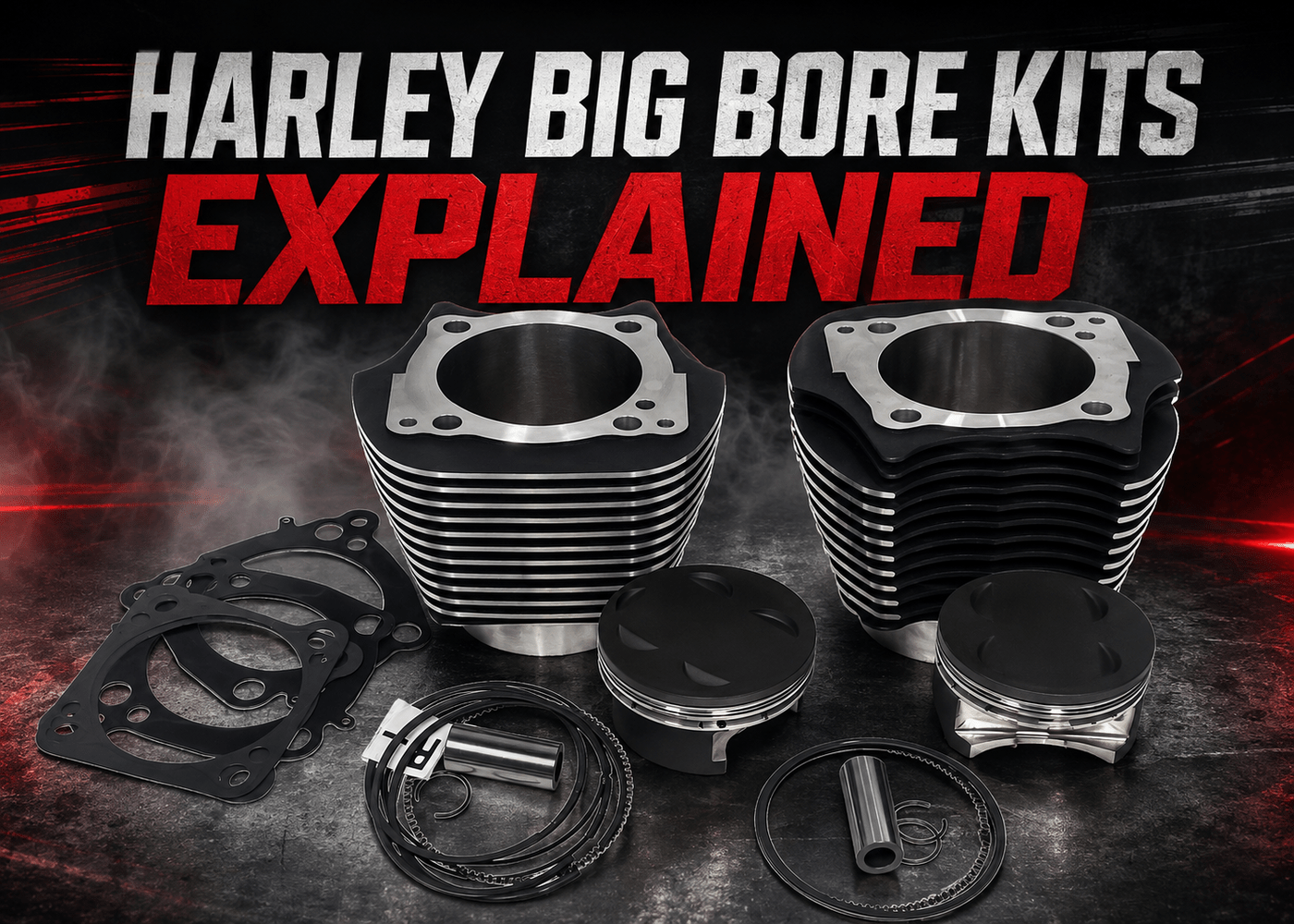
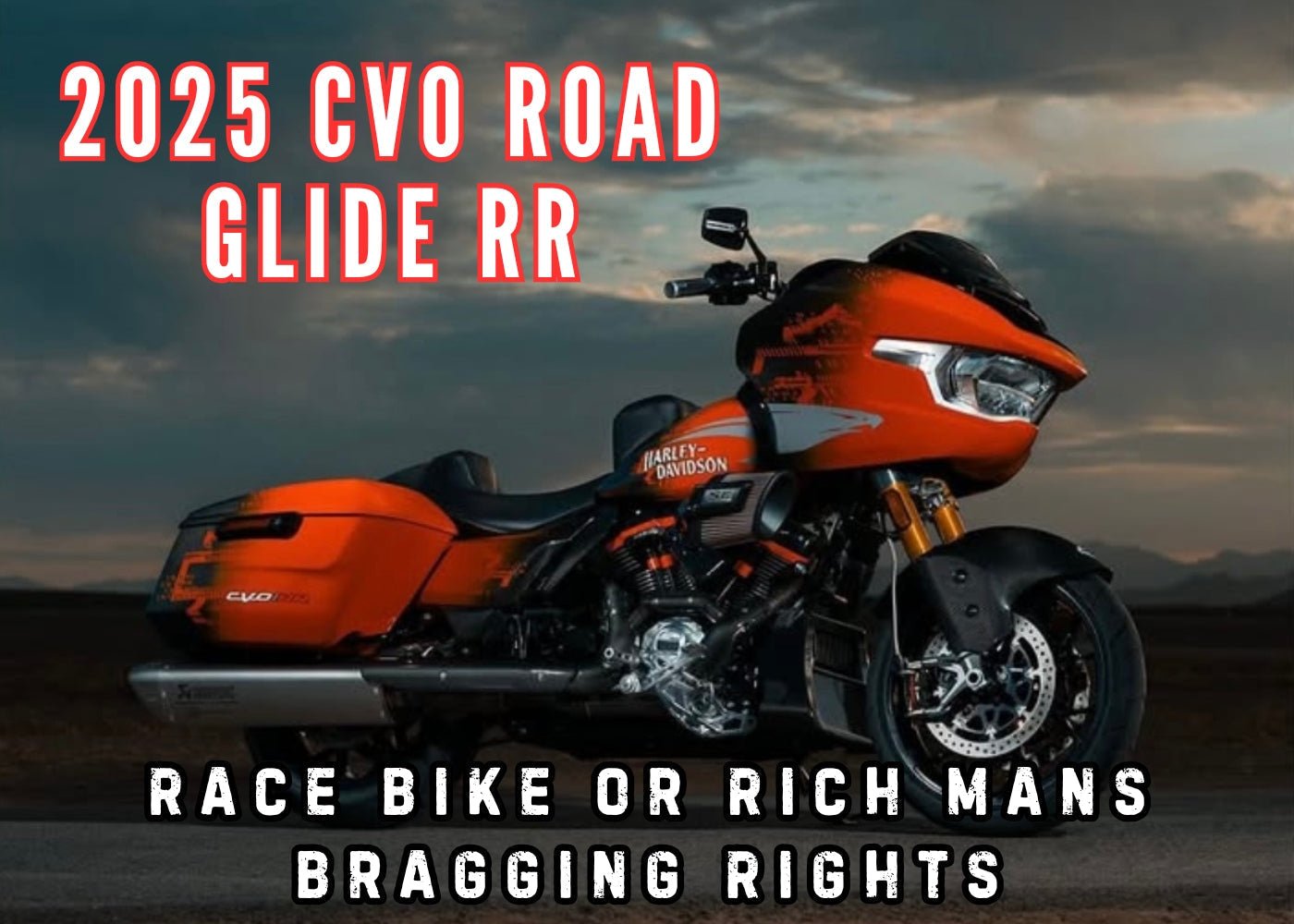
 original image from: Cutaway Creations
A plain, no nonsense guide to how big bore kits work, how they are different from a stroker, and which kit matches your Harley. All the numbers here are checked against Harley factory specs. Sources are listed at the bottom.
If you have ever typed "big bore kit explained" into Google and walked away more confused than when you started, this one is for you. We are going to keep it simple.
A big bore kit is one of the easiest ways to make real power on a Harley. The problem is that the words around it (bore, stroke, stage, displacement) get thrown around like everybody already knows what they mean. And if you guess wrong, you can spend a lot of money on parts that do not even fit your engine. So let us slow down and explain it the way we would to a buddy at the counter.
First, how an engine makes power
Picture a metal cup. Inside that cup, a plug of metal called a piston slides up and down. Fuel and air go in, a spark lights it, and the little explosion shoves the piston down. That push is what turns your wheel. A Harley has two of these cups, which is why folks call it a V twin.
Here is the whole secret in one sentence: the more air and fuel you can burn in one push, the more power you make.
So how do you burn more? You make the cup hold more. There are two ways to do that.
- Make the cup wider. That width is called the bore.
- Make the piston slide farther each time. That distance is called the stroke.
Do either one, and the engine gulps a bigger mouthful of air and fuel every time it fires. Bigger mouthful means bigger push. Bigger push means more power. That mouthful size has a name too. It is called displacement, and it is just the total space the pistons sweep through.

So what is a big bore kit?
A big bore kit is the first way from above. It swaps your stock cups (cylinders) and pistons for wider ones. Same engine, wider cups, bigger mouthful, more power.
The nice part is that the wider cups sit right on top of the engine you already have. You do not have to crack open the bottom of the motor to install them. That makes a big bore kit one of the cheaper and quicker ways to add real muscle (HDForums).
One quick note on numbers, because Harley uses two kinds. Engine size gets written in cubic inches (like "107") and in cc (like "1,750cc"). They are the same thing measured two ways. One cubic inch equals about 16.4cc, a number Harley prints right in its own manuals (Backyard Rider). So when you see "88 inch" and "1,450cc," that is one engine, not two. Bigger number just means bigger engine.
Big bore or stroker? The easy way to remember it
People mix these two up all the time, so here is the simple version.
A big bore makes the cup wider. It is a top of the engine job, so it usually costs less and goes in faster.
A stroker makes the piston travel farther up and down. To do that you have to open up the bottom of the engine and change parts down there, so it takes more work and more money (MotoFomo).
They even feel a little different when you ride. A longer stroke gives you that strong pull right off idle, the low end grunt Harleys are famous for. A wider bore likes to breathe and spin a bit faster before it really wakes up (Hot Bike).
Harley showed us both tricks with its own engines. When the Twin Cam grew from an 88 into a 96, they kept the same width and just made the piston travel farther. That was a stroker move. Later, when they went to the 103, they left the travel alone and made the cups wider instead. That was a bore move (Haynes).
Know your engine before you buy anything
This is the step people skip, and it is the one that saves you money. A big bore kit is built for one engine family, and often for one exact starting size. So figure out what you are riding first. Here are the real factory numbers.
Evolution Big Twin (1984 to 1999). One size only. 80 cubic inches, which is 1,340cc. (The exact math is closer to 81.8, but Harley called it 80.) You will find it in older Touring, Dyna, and Softail bikes (It Still Runs).
Sportster Evolution (1986 to 2020). Came as an 883cc and a 1200cc. This is the longest running engine Harley ever built (Backyard Rider).
Twin Cam (1999 to 2017). The name is basically the size in cubic inches.
- 88 is 1,450cc
- 96 is 1,584cc
- 103 is 1,690cc
- 110 is 1,802cc, the fancy CVO version
Milwaukee-Eight (2017 to today). Harley's newest big engine.
- 107 is about 1,750cc
- 114 is about 1,868cc
- 117 is about 1,923cc
- 121 and 131 show up in the top CVO bikes
Those Twin Cam and Milwaukee-Eight numbers come straight from Harley service manual specs (Backyard Rider; Fuel Moto).

Where a big bore fits in the "Stages"
You will hear a big bore called a "Stage 3." Think of the stages like leveling up in a game. Each one adds a little more. Just know the labels are not carved in stone, and different shops use them a little differently (HDForums).
Here is the usual ladder:
- Stage 1. Help the engine breathe. A better air cleaner to let more air in, a better exhaust to let it out, and a tune so the bike's computer knows what changed.
- Stage 2. Add a cam. A cam is the part that decides how long the valves stay open. A bigger cam lets in more air at the right moment for a stronger middle punch.
- Stage 3. The big bore. Wider cups, more mouthful, a real jump in power (The Seasoned Wrench).
- Stage 4. The full build. Better heads and a bigger throttle to move all that extra air (Iron Horse Union).
The point to take home is this. A big bore gives you the most when the rest of the engine can keep up. Wider cups need air to fill them, so a big bore works best when it is paired with good breathing (Stage 1) and usually a cam. Bolt big cups onto a stock, choked up motor and you leave power sitting on the table.
Which big bore kit fits your Harley
Here is how each engine lines up with kits we carry at MetalCore Harley Supply. Check your exact year and model on the product page before you order.
Milwaukee-Eight (2017 and up)
This is the most popular engine for big bore work right now. The kit you need depends on where you start, since a 107 and a 114 or 117 take different parts.
- Starting with a 107: the S&S 129" Big Bore Cylinder Kit takes it up to 129 inches.
- Starting with a 114 or 117: the S&S 132" Big Bore Cylinder Kit fits those.
- For a bolt on option: the Revolution Performance 124" / 128" Big Bore Kit.
- For the biggest build: the Revolution 139" / 143" Monster Big Bore Kit.
Twin Cam (1999 to 2017)
The Twin Cam has the most choices because it has been around the longest.
- Revolution 98" Big Bore Kit for early 1999 to 2006 bikes.
- Revolution 107" / 113" / 124" Cylinder Kits for a range of sizes.
- Revolution 117" / 124" / 131" Monster Big Bore Kits for the big ones.
- S&S 124" Cylinder and Piston Kit for 2007 to 2017 bikes.
- S&S Bolt In Sidewinder 4" Big Bore Kit for a simple bolt in bump.
Want to go the stroker route instead? The S&S 106" Stroker Flywheel Kit adds size by making the piston travel farther.

Evolution Big Twin (1984 to 1999)
- Revolution 85" / 92" Bolt On Big Bore Kit.
- Revolution 100" / 109" Monster Big Bore Kit.
- S&S 96" Big Bore Kit for 1984 to 1999 Evo Big Twins.
Sportster
- S&S 1250cc Big Bore Conversion Kit for 1986 to 2022 Sportsters.
- S&S 1200cc Conversion Kit for the 883, the classic way to turn an 883 into a 1200.
- Revolution 90" Monster Big Bore Kit for the biggest Sportster size.
Don't forget the little stuff
A big bore kit almost never goes in by itself. To do it right, plan on a few extra pieces.
- Fresh gaskets. Any time the cups come off, the gaskets get replaced. The Revolution Top End Gasket Kit covers Twin Cam and Milwaukee-Eight bikes.
- A tune. A bigger engine needs more fuel to match the extra air. The bike's computer has to be updated so it runs right and stays safe. Skipping this can hurt the motor.
- A cam, and good breathing. Wider cups want more air. Pair the big bore with the right cam and a Stage 1 setup and that is when it really comes alive.
Quick answers to common questions
What does a big bore kit do to horsepower?
It makes the engine bigger inside, so it burns more air and fuel every time it fires. That means more power and more pull. How much you gain depends on the kit and the parts around it, like the tune, the cam, and the exhaust.
Is a big bore better than a stroker?
Neither one wins every time. A big bore is usually cheaper and simpler because it works on the top of the engine, and it likes to spin up. A stroker gives more low end pull but costs more because you have to open up the bottom of the motor. Most riders start with a big bore for the best power per dollar.
How do I know which kit fits?
Start with your engine family (Evo, Twin Cam, Milwaukee-Eight, or Sportster) and your exact stock size. For example, a Milwaukee-Eight 107 and a 114 take different kits. Then match the years listed on the product. Not sure? Send us your year, model, and engine size and we will point you to the right one.
Do I need a tune after a big bore?
Yes. On fuel injected Harleys the computer has to be set up for the new size, or the fuel mix will be off. That can mean weak power or engine damage.
What is the difference between bore and stroke again?
Bore is how wide the cup is. Stroke is how far the piston slides in it. Wider likes to spin faster. Longer gives more pull down low.
Ready to build? Browse our engine kits by model, or just reach out with your year and engine size and we will match you to the exact kit that fits your bike.
Sources
- It Still Runs, Harley 1340 (Evo) specs: itstillruns.com
- Backyard Rider, Harley engine size chart and cc to cubic inch conversion: backyardrider.com
- Haynes, Twin Cam history and bore and stroke changes: us.haynes.com
- Fuel Moto University, Milwaukee-Eight engine and big bore sizes: university.fuelmotousa.com
- Hot Bike, engine fundamentals on bore and stroke: hotbike.com
- MotoFomo, displacement, bore and stroke: motofomo.com
- HDForums, stroker versus big bore: hdforums.com
- HDForums, stages explained: hdforums.com
- The Seasoned Wrench, Harley stage kits explained: theseasonedwrench.com
- Iron Horse Union, Screamin' Eagle stages: ironhorseunion.com
All engine sizes and specs reflect Harley-Davidson factory figures as reported in the manual based sources above. Always check fitment for your exact year and model before you buy.

Leave a comment
This site is protected by hCaptcha and the hCaptcha Privacy Policy and Terms of Service apply.